
Water Heater Repair & Replacement in Plano, TX
Water heater repair in Plano usually comes down to one thing that has nothing to do with the unit itself: the water it's been heating.
Plano is supplied by the North Texas Municipal Water District, which runs around eleven to twelve grains per gallon. That's hard enough that most tanks here fall short of the eight-to-twelve-year range printed on the label, and it's why so many Plano homeowners find themselves replacing a heater that feels newer than it is.
Master Plumber M-46550 · Licensed & Insured · Open 24/7
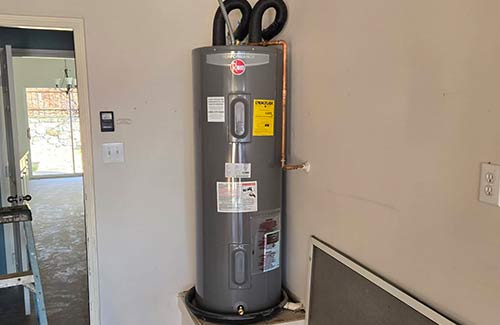
Signs Yours Is Near the End
- Popping or rumbling while it heats
- Hot water running out faster than it used to
- Rusty or brown hot water
- Moisture, rust, or staining around the base
- The relief valve dripping or discharging
- It’s original to the house and the house is over twelve years old
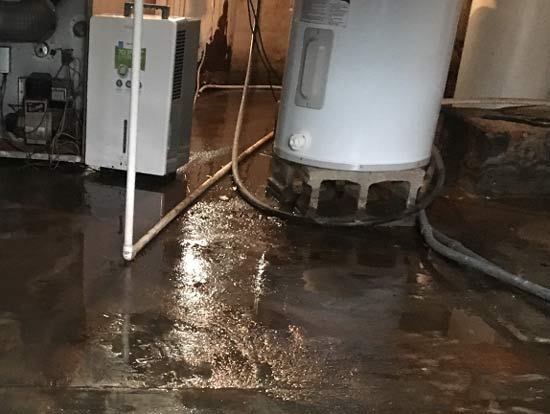
A leak from the tank body can’t be repaired. If you’re seeing water at the base, get it looked at today rather than at the weekend. Leaks at fittings and connections are a different matter and usually fixable.
What Hard Water Does to a Tank
Two things, and the second one is the part most people never hear about.
Scale insulates the tank bottom. Minerals drop out of solution when water is heated and settle at the bottom of the tank. That layer sits between the burner and the water, so the burner runs longer and hotter to reach the same temperature. You’re adding thermal stress to the tank shell on every cycle. That’s also the popping you hear — water trapped under hardened sediment, flashing to steam.
Scale depletes the anode rod. The anode is a sacrificial component that corrodes so the tank doesn’t. In hard water it’s consumed at roughly double the normal rate, and once it’s gone the tank itself starts corroding. Almost nobody checks it.
Flushing once a year is the fix for the first problem and it’s a job most homeowners can do themselves. We’re happy to show you while we’re there. Slowing the second one means softening the water, which in Plano is worth pricing if you’re replacing a heater anyway.
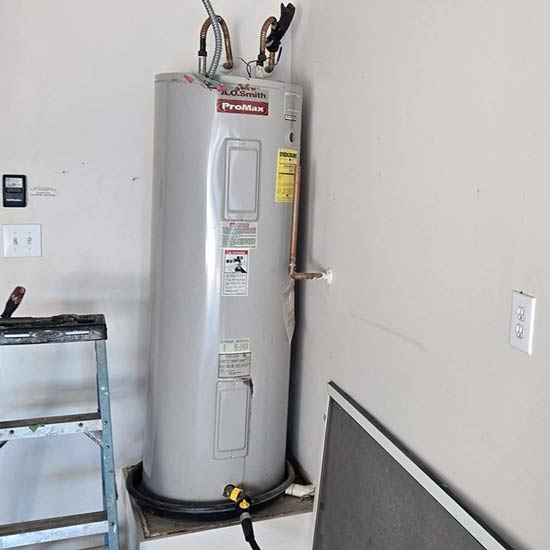
Two Plano Housing Eras, Two Situations
Older east Plano. Heaters here have often been replaced once or twice already, so the age of the house tells you little. What matters more is whether the installation was brought up to current code the last time it was done, and whether the space it sits in meets today’s clearance and drainage requirements.
West and north Plano. Homes from the 1990s and 2000s are frequently on their first or second heater, and those units are now reaching or passing their expected life together. If yours is original to a 1998 build, it’s well past the range rather than approaching it.
Repair or Replace
Worth repairing: under about eight years, and the fault is a serviceable part — thermostat, heating element, gas valve, T&P valve — with the tank itself sound.
Worth replacing: over ten to twelve years with a significant fault, any leak from the tank body, rusty hot water, or repairs starting to cluster rather than being one-offs.
We’ll tell you which side you’re on, including when the repair is the cheaper answer. A thermostat on a seven-year-old tank is a repair.
Considering tankless? It’s worth pricing if you’re replacing anyway, though the gas line is the item that separates a real quote from a cheap one — a tankless unit needs roughly four to five times the gas flow of a tank, and most existing lines are undersized for it.
Permits in Plano
Water heater replacement is permitted work, and Plano requires contractors to be registered before performing it. We’re registered with the city, and we pull the permit and schedule the inspection through eTRAKiT.
Replacements are same-day in most cases. We carry common sizes and take the old unit away.
Plano Water Heater FAQs
How long should a water heater last in Plano?
Eight to twelve years is the rated range, and NTMWD water tends to pull that toward the lower end. Annual flushing genuinely helps. If yours is past ten and starting to make noise or run rusty, start planning rather than waiting for the leak.
What size do I need?
It follows bathroom count and how your household uses hot water in the morning rather than square footage. Most Plano homes land at 40 or 50 gallons. Oversizing costs more to run; undersizing means cold showers at the end of the queue. We’ll size it on site.
Should I stay with gas or switch to electric?
Usually stay with what you have. Converting means running new gas lines and venting, or significant electrical work, and the running-cost difference rarely justifies that on a straight replacement. If you’re remodelling anyway, it becomes a fairer question.
What's the anode rod and should I care?
It’s a sacrificial rod inside the tank that corrodes in place of the tank walls. In Plano’s water it depletes roughly twice as fast as it would in softer water, and once it’s gone the tank starts corroding. Checking it every few years and replacing it when it’s half consumed is one of the cheapest ways to extend a tank’s life.
Do I need a drain pan or an expansion tank?
Depends on where the unit sits and whether your home is on a closed system. A pan with a drain is required where a leak would cause damage — an attic or an interior closet over finished space, for example. An expansion tank is required on closed systems, and plenty of older Plano homes predate that requirement, so it gets added at replacement. Both are code items an inspection will pick up.
Is a water heater replacement worth doing before it fails?
On a unit past ten years, often yes. A planned replacement is scheduled, quoted, and done on a weekday. A failed one is an emergency call plus whatever the water did to the floor around it.
Other Plano services: slab leak repair · sewer line repair · drain cleaning · all Plano plumbing
Need a Water Heater in Plano Today?
Tell us the age of the unit and what it’s doing. We’ll usually know what to bring before we leave the shop.